
Salt Mist Resistance of Ground Mounting Systems in Coastal Areas
Technical guide to evaluating salt mist resistance, duplex anti-corrosion coatings, and ISO 9227 standards for coastal ground mounting systems.
Introduction: The Coastal Corrosion Challenge
Utility-scale and commercial PV projects deployed within 5 kilometers of ocean shorelines face aggressive environmental degradation. Atmospheric chloride concentrations in C5-M marine environments accelerate oxidation rates on exposed steel and aluminum structures, leading to mechanical failure, frame deformation, and premature capital expenditure through emergency maintenance. Standard hot-dip galvanized (HDG) coatings designed for inland soil applications often exhibit pitting and coating depletion within 3 to 7 years of exposure to salt-laden moisture, failing to match the typical 25-year performance warranty of PV modules.
Selecting structural support systems for coastal utility assets requires precise material selection, strict coating thickness specifications, and structural design that mitigates galvanic corrosion and mechanical stress. This technical guide outlines the structural metallurgy, isolation design principles, and international validation testing needed to specify durable ground mounting systems for high-salinity zones.
Technical Analysis: Metallurgical Defense & Duplex Coatings
Ground mounting structures in high-salinity zones require multi-layered corrosion protection to prevent loss of structural integrity under combined wind load and salt-mist exposure.
1. Duplex Anti-Corrosion Coating Architecture
Standard single-layer galvanizing provides sacrificial protection through zinc oxidation. However, continuous airborne chloride exposure converts zinc hydroxide into soluble zinc chloride, rapidly consuming the protective layer. A Duplex Anti-Corrosion Coating combines a metallic sacrificial layer with an organic topcoat barrier:
Zinc-Aluminum-Magnesium (ZAM) Alloy Base: ZAM coatings containing 3% Aluminum and 2% Magnesium form a dense, adherent corrosion product known as simonkolleite (Zn5 (OH) 8Cl2H2O). This layer self-heals at cut edges and punched holes, reducing the red rust formation rate to less than 10% of standard galvanized steel.
Anodized Aluminum (AL6005-T5): For aluminum sub-structures, a minimum anodic film thickness of 20–25 um (Class AA20 or AA25 according to ISO 7599) prevents pitting corrosion caused by local accumulation of sodium chloride salts.
Fluorocarbon / Epoxy Topcoats: Applied over the metallic substrate, a 20–30 um dry film thickness (DFT) polymer top layer seals micro-porosities, blocking moisture and chloride ion ingress.
2. Salt-Mist Isolation Architecture
Galvanic corrosion occurs when dissimilar metals (such as stainless steel fasteners, aluminum rails, and structural steel posts) come into contact in the presence of an electrolyte (saltwater mist). Coastal mounting designs incorporate systemic isolation protocols:
EPR / EPDM Isolation Gaskets: Ethylene Propylene Diene Monomer gaskets with a Shore hardness of 70A are inserted between aluminum rails and steel connector brackets to break the electrical pathway.
Dacromet / Geomet Coated Fasteners: Structural hardware utilizes Grade 316 (A4) stainless steel or Grade 8.8 steel treated with zinc-flake coatings, avoiding standard electro-zinc plated bolts that experience rapid galvanic breakdown.

Industry Standards & ROI Impact
Selecting structural materials based purely on initial procurement costs (/kW) often increases operational expenditure (OPEX) over the project lifecycle.
Technical Parameter Comparison: Marine-Grade vs. Standard Racking
|
Parameter |
Standard Ground Racking (Inland) |
C5 Marine-Grade Coastal Mounting System |
Standard Compliance |
|
Primary Material |
Q235B Steel / AL6005-T6 |
High-Strength Q355B Steel / AL6005-T5 |
ASTM A36 / EN 10025-2 |
|
Galvanizing / Coating |
Hot-Dip Galvanized (HDG) |
Duplex Coating (ZAM / HDG + Epoxy Sealant) |
ISO 1461 / ASTM A123 |
|
Steel Zinc Coating Thickness |
65–85 μm (450–600 g/m2) |
≥100 μm (≥700 g/m2) or ZAM 275 g/m2 |
ISO 1461 |
|
Anodizing Thickness (Aluminum) |
10–15 μm (Class AA10) |
≥20–25 μm (Class AA20/AA25) |
ISO 7599 / GB 5237.2 |
|
Salt Spray Resistance |
ISO 9227 NSS: 480 Hours |
ISO 9227 NSS: 1,500–3,000 Hours |
ISO 9227 / ASTM B117 |
|
Design Life & Warranty |
10–15 Years |
25 Years Structural Warranty |
IEC 61215 Structural Criteria |
LCOE and Financial Return Metrics
Substandard coating choices in coastal environments lead to structural degradation, requiring mid-life replacement of mounting posts, re-torquing of corroded hardware, or unclamping modules for repair.
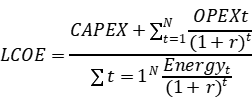
·CAPEX Impact: Upgrading from standard 85um HDG to a 100+um Duplex/ZAM marine-grade specification increases initial mounting system costs by approximately 8% to 12% (translating to a ~1% increase in total plant CAPEX).
·OPEX Savings: Eliminating structural re-coatings, torque checks on corroded bolts, and unplanned component failure avoids an estimated $0.003–$0.005 per kWh in operational maintenance overhead over 25 years.
·LCOE Reduction: Extending asset lifetime without structural replacement yields an estimated total Levelized Cost of Energy reduction of 3.2% to 4.5% in C4/C5 rated environments.

System Integration & Compatibility
A durable mounting infrastructure must integrate seamlessly into the broader balance of plant (BOP) system without creating secondary structural failure points or thermal mismatch issues.
1.Module Frame Interface: Direct contact between raw aluminum module frames and zinc-coated steel mounting rails creates galvanic cells under humid conditions. Ground Mounting Systems designed for coastal applications feature specialized rubber padding or coated mid/end clamps that isolate the module frame while maintaining mechanical clamp retention forces up to 2.4 kPa snow load and 5.5 kPa wind suction.
2.Structural Foundation Integration: Ground mounting setups integrate with driven C-steel piles, PHC concrete piles, or helical screw anchors. For coastal mudflats or sandy soils with high groundwater salinity, driven piles receive an additional bitumen or polyurea protective coating extending 500 mm above and below the soil line to prevent severe subterranean splash-zone corrosion.
3.Grounding Continuity: Integrated earthing pins (stainless steel 304/316 with penetration teeth) pierce the anodized film of the rails to maintain electrical continuity without compromising overall corrosion resistance, meeting UL 467 and IEC 61730 grounding requirements.
Quality Control & Global Compliance
Evaluating manufacturing consistency requires rigorous compliance verification against international accelerated aging and mechanical testing standards.
ISO 9227 Salt Spray Test Validation
Structural samples undergo standardized accelerated environmental testing in environmental test chambers:
Neutral Salt Spray (NSS): Exposure to a 5%NaCl mist solution at 35°C for 1,500 to 3,000 hours. Marine-grade components must display zero red rust formation at 1,500 hours.
Cyclic Corrosion Testing (CCT / ISO 11997-1): Alternating cycles of salt spray, humidity (95% RH at 40°C), and dry heating (60°C) simulate real-world coastal conditions, measuring micro-cracking and blister resistance.
Quality Assurance Protocols
Manufacturing quality control includes non-destructive and destructive testing before dispatch:
Coating Thickness Measurement: Verification via magnetic/eddy-current methods (ISO 2178 / ISO 2360) across 10 random sample points per batch to ensure compliance with minimum thickness specifications.
Adhesion Testing: Cross-cut tape test (ISO 2409) to confirm topcoat bonding to metallic substrates under thermal stress.

FAQ
1.How do ZAM and HDG coatings perform under severe C5-M salt mist conditions?
Under C5-M (very high marine) conditions, traditional Hot-Dip Galvanized (HDG) coatings erode at rates between 4.2 to 8.4um per year, meaning an 85um zinc layer can deplete within 10 to 15 years. Zinc-Aluminum-Magnesium (ZAM) coatings form a dense simonkolleite protective film that reduces the mass loss rate to less than one-third that of standard HDG, allowing a 275g/m2 (approx. 20–25um) ZAM coating to provide superior edge and surface protection over a 25-year design life.
2.What packaging and transport standards are required for sea freight of coastal solar mounting systems?
Ocean transit exposes steel and aluminum hardware to high humidity and container condensation ("container rain"). Marine shipments require:
1)Vapor Corrosion Inhibitor (VCI) plastic wrapping around steel components.
2)Desiccant packs distributed inside wooden crates or steel frame bundles.
3)Fumigated, heat-treated ISPM-15 wooden pallets with plastic edge protectors to prevent physical abrasion of the anodized or galvanized surfaces during forklift handling.
3.What are the design limits and lead times for OEM/ODM anti-corrosion ground mounting structural profiles?
Custom engineering lead times typically run 7 to 10 days for structural calculation verification (using ANSYS or STAAD Pro under local wind/snow load codes) and 15 to 20 days for custom tooling/die manufacturing. Technical boundaries for custom profiles include section thicknesses between 1.5 mm and 6.0 mm, beam spans up to 7.0 meters, and custom anodizing up to 25 um or HDG coating options up to 120um.
Engineering Consultation & Procurement
Contact our engineering team for a customized 20kW PV system layout and detailed BOM quote within 48 hours.